Brachycephaly

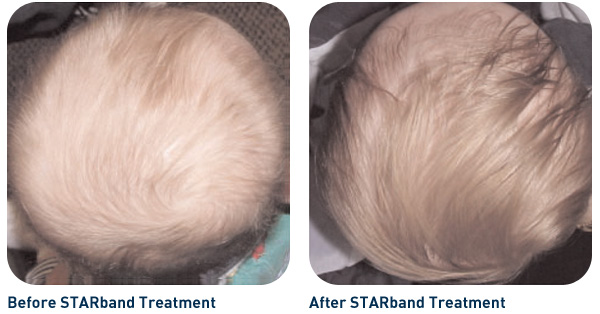
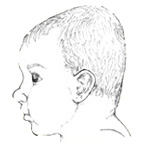
Deformational brachycephaly is a condition that, while it may seem uncommon, affects about 1 in 10 children referred for treatment. It is characterized by a uniformly flattened back of the baby’s head, resulting in a broader and shorter head shape. Remember, you are not alone in this journey.

Quick Answer

Deformational brachycephaly is a uniform flattening of the back of the head, often caused by extended time spent on the back — whether sleeping (recommended for SIDS prevention) or in carriers and positioning devices. Mild cases often improve with repositioning techniques, while more pronounced cases are treated with a custom STARband™ helmet. Most babies achieve excellent outcomes with early detection and the right treatment plan.

1 in 10 Children referred for cranial treatment have deformational brachycephaly
Back-Sleeping & extended carrier time are the most common preventable causes
STARband™ Helmet therapy is used for more pronounced cases needing reshaping

Causes of Deformational Brachycephaly

Several factors can contribute to the development of deformational brachycephaly — and many of them are preventable. A baby spending excessive time in carriers, often due to medical conditions such as gastric reflux, can be managed with proper guidance. Tummy time, a crucial preventive measure, encourages babies to move and develop strong neck muscles, helping prevent head flattening.

Another significant factor is the routine practice of placing babies on their backs to sleep, a position recommended to reduce the risk of sudden infant death syndrome (SIDS). However, consistently sleeping on the back can cause the head to flatten uniformly, leading to a broader and shorter shape.

Signs to Look For

Parents and caregivers might notice signs of deformational brachycephaly as early as a few months old. Key indicators include:

  • A flat area on the back of the head
  • The head appears disproportionately wide
  • A prominent forehead on both sides
  • Increased height of the head

It’s important to differentiate deformational brachycephaly from other cranial conditions, such as plagiocephaly, which involves asymmetrical (one-sided) flattening rather than the uniform flattening seen in brachycephaly. A common variation, asymmetrical brachycephaly, ranks second only to deformational plagiocephaly in incidence, based on scans sent to Orthomerica for STARband™ fabrication.

Diagnosis and Assessment

Diagnosing deformational brachycephaly involves a thorough physical examination by a pediatrician or specialist, who will assess the shape and symmetry of the baby’s head along with medical history and behavior patterns that might be contributing factors. In some cases, imaging studies such as X-rays or CT scans may be used to rule out craniosynostosis, a condition where the skull bones fuse prematurely.

Treatment Options

Brachycephaly treatment

The primary goal of treatment is to improve the shape and proportion of the baby’s head. Treatment strategies include:

Repositioning Techniques: encouraging supervised tummy time while the baby is awake, altering sleep position to reduce pressure on the flattened area, and using positioning devices to help redistribute pressure on the head.

Helmet Therapy: for more pronounced cases, cranial orthotic devices such as the STARband™ helmet are custom-made to gently reshape the baby’s head over time, applying mild pressure to prominent areas while allowing room for growth in flattened areas.

Monitoring and Follow-Up: regular follow-up appointments with a healthcare provider are essential to monitor progress and adjust the treatment plan as needed.

Prevention Tips

  • Ensure the baby gets plenty of supervised tummy time daily
  • Alternate the baby’s head position during sleep
  • Limit the use of carriers and other devices that apply constant pressure on the back of the head

Frequently Asked Questions

What is deformational brachycephaly?

Deformational brachycephaly is a condition characterized by a uniformly flattened back of the head, resulting in a broader and shorter head shape, with the forehead often becoming prominent on both sides.

What causes brachycephaly?

Common causes include extended time spent on the back of the head — from back-sleeping (recommended for SIDS prevention) or from carriers and positioning devices — combined with limited tummy time, which is needed to build the neck strength that helps prevent flattening.

How common is brachycephaly?

Deformational brachycephaly affects about 1 in 10 children referred for cranial treatment. Asymmetrical brachycephaly, a common variation, ranks second only to deformational plagiocephaly in incidence among STARband™ cases.

What’s the difference between brachycephaly and plagiocephaly?

Brachycephaly is a uniform flattening across the back of the head, resulting in a broader, shorter shape. Plagiocephaly involves asymmetrical, one-sided flattening.

How is brachycephaly treated?

Mild cases are often managed with repositioning techniques, such as supervised tummy time and adjusted sleep positioning. More pronounced cases may be treated with a custom STARband™ helmet, which gently reshapes the head over time. Regular follow-up appointments help monitor progress along the way.